Kitchen Rules-B in the Hoop Review
As a professional embroidery designer who spends countless hours digitizing and testing files for commercial projects, I approach every new download with a mix of excitement and skepticism. When I first encountered Kitchen Rules-B in the Hoop on Creative Fabrica, I immediately thought about its potential for small business owners and Etsy sellers looking to expand their home decor collections. This design promises to set the stage for a well-run kitchen, but does it hold up under the pressure of real-world production? After putting this embroidery file through a series of test runs on various fabrics, here is my honest evaluation.
First Impressions: Visual Mood and Design Personality
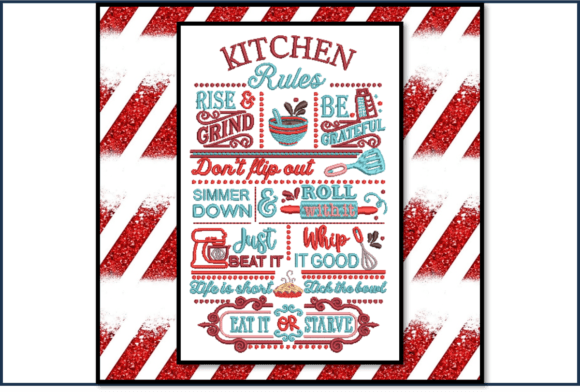
The moment you open the Kitchen Rules-B in the Hoop project, the visual appeal is evident. It is designed as a mini wall hanging, which suggests an intimate scale perfect for modern kitchens or craft rooms. The typography feels crisp, and the layout balances text with decorative elements in a way that feels cohesive rather than cluttered. For those of us who value brand consistency, this design offers a clean aesthetic that translates well from digital mockups to physical products.
The digitization shows a thoughtful approach to stitch types. You can see where the designer utilized satin stitch for outlines to give the letters definition, while fill stitch areas appear dense enough to cover the fabric without showing too much background. There are also hints of running stitch details that add texture, breaking up the solid blocks of color. This variety gives the finished product a handcrafted feel, which is crucial for selling handmade products at a premium price point.
Performance in Real Embroidery Projects
I tested this machine embroidery design on several substrates to see how it performs outside of a studio setting. First, I tried it on a standard kitchen towel. The results were excellent; the design held its shape beautifully, and the thread colors popped against the white cotton. However, when I moved to a stretchy jersey fabric for a sweatshirt embroidery project, I noticed the need for a heavier stabilizer. The design has enough detail that if the fabric shifts even slightly during stitching, the registration could suffer.
For custom apparel like tote bags, this design shines. The dimensions work perfectly for the center chest area or the front panel of a canvas tote. The stitch density is appropriate for these materials, ensuring durability without making the fabric too stiff. I also experimented with using it as an embroidered patch by adding a border, though I would recommend checking the specific file details to ensure there is enough clearance for trimming. If you are planning to sell commercial embroidery items, the versatility of this digital embroidery file makes it a strong candidate for your inventory.
Small Details and Lettering Clarity
One of the most critical aspects of any embroidery design is legibility. In Kitchen Rules-B in the Hoop, the lettering is clear, but it requires precision. On smaller hoop sizes, tiny characters can sometimes merge together. I advise testing this on your specific machine before committing to a large run. If you plan to use this for personalized gifts, ensure your digitizer settings allow for the smallest font sizes to remain distinct. The design works best when the text is not compressed too tightly.
Practical Considerations for Production
When integrating this into your workflow, practical constraints matter. The description notes that the design is digitized for stitching on three layers, which implies a medium-to-large size suitable for wall hangings or larger garment panels. If you are working with a limited hoop size, you may need to split the design or adjust the scaling, which can affect the final look.
Fabric choice plays a significant role in the outcome. Dark fabrics require high-contrast thread colors and potentially a backing layer to prevent the dark material from bleeding through the stitches. Conversely, textured fabrics like linen can hide some minor imperfections in the digitizing, but they also demand more aggressive stabilization. Always remember to test on scrap fabric first to gauge the tension and density. Using the proper stabilizer is non-negotiable for maintaining the structural integrity of the design, especially on items that will undergo frequent washing.
Impact on Product Value and Branding
For entrepreneurs selling on Etsy or at craft fairs, the quality of the embroidery directly influences buyer trust. A well-executed finished product featuring Kitchen Rules-B in the Hoop looks professional and polished. The design's theme resonates with customers looking for cozy, organized home accents, making it highly giftable. When you photograph these items for printable mockups or online listings, the clean lines and balanced composition create an inviting image that drives engagement.
Consistency is key for building a brand. If you use this design across a line of aprons, pillow covers, and nursery decor, it creates a recognizable visual identity. Customers appreciate seeing a cohesive collection. However, be mindful of over-saturation; using the same design on every item might dilute the perceived uniqueness. Use it strategically as a signature piece within a broader catalog of design assets.
Essential Technical Notes Before You Stitch
Before you begin producing for sale, there are several technical steps you must take. First, review the license terms on the Creative Fabrica product page carefully. Understanding what you can and cannot do with the embroidery file protects your business from legal issues. Confirm the file formats available to ensure compatibility with your embroidery software and machine.
Always inspect small details after stitching. Zoom in on the corners and edges to check for puckering or skipped stitches. Compare light and dark fabric mockups to ensure the thread colors provide the necessary contrast. If the design includes applique elements, verify that the applique design instructions are clear and that you have the correct fabric weights for the application. Finally, double-check the stitch density to ensure the design is not too heavy for delicate fabrics like baby blankets or thin cottons.
Final Verdict
Kitchen Rules-B in the Hoop is a solid addition to any embroidery designer's library. Its focus on a well-run kitchen theme aligns perfectly with current trends in home decor and lifestyle products. While it requires careful attention to stabilization and fabric selection, the end result is a high-quality piece that adds value to handmade goods. Whether you are creating a unique tote bag design, a seasonal gift, or a boutique merchandise item, this design offers a reliable foundation for your creative projects. Just remember to test thoroughly and respect the technical limitations of your equipment to ensure every customer receives a premium handmade product.