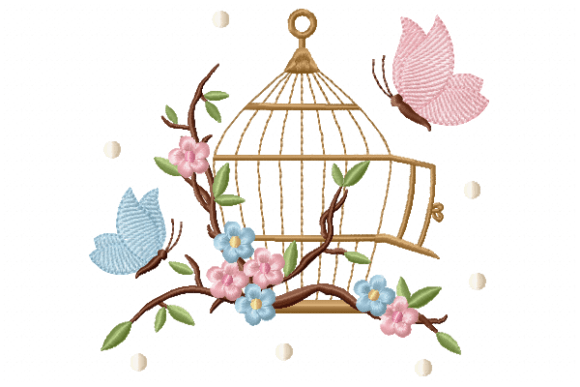
Bird Cage Embroidery Design Review
As an experienced embroidery designer who has spent years helping small businesses translate their brand vision into tangible products, I approach every new design file with a mix of excitement and critical scrutiny. Today, I am reviewing the Bird Cage machine embroidery design. While the product description highlights its versatility for towels, sheets, curtains, and clothes, my focus is strictly on its viability for commercial applications: branded patches, staff uniforms, cap designs, tote bags, and small business merchandise. When you are running a boutique, a café, or a handmade shop, your embroidered assets are not just decoration; they are the physical embodiment of your brand identity.
First Impressions and Brand Personality
The title Bird Cage immediately evokes a specific aesthetic. In the world of embroidery file selection, names often dictate the perceived personality of the final stitch work. A design named Bird Cage suggests a blend of structure and freedom. It feels both classic and slightly whimsical, making it an excellent candidate for brands that want to project a sense of care, organization, or artisanal charm. Whether you own a florist studio, a pet brand, a creative bakery, or a local craft store, this design has the potential to serve as a visual anchor for your brand identity.
The description mentions that the design can be used on various textiles, which implies a balanced stitch density and a silhouette that is likely neither too sparse nor overly dense. For a professional review, we must ask: does this design feel premium? Does it look like a mass-produced sticker or a high-quality custom patch? Based on the context of "beautiful design" and its intended use on home goods and apparel, the Bird Cage motif appears to lean towards a friendly yet elegant vibe. This duality is crucial for small business owners looking to create products that appeal to customers seeking a personal touch without sacrificing professionalism.
Real-World Application for Small Business Merch
The true test of any machine embroidery design lies in its performance across different merchandise categories. Let us imagine a scenario where a small café or a handmade soap shop wants to launch a line of branded aprons and tote bags. How would the Bird Cage design function in these settings?
- Embroidered Patches: One of the most popular uses for a design like this is creating iron-on or sew-on patches. The Bird Cage concept works exceptionally well for patches because the imagery is contained within a defined shape. You could apply these to denim jackets, canvas totes, or even the back of baseball caps. A well-executed patch adds immediate value to a garment, transforming a standard item into a collectible piece of custom apparel.
- Staff Uniforms and Aprons: For service-oriented businesses, consistency is key. Placing the Bird Cage design on the chest of a chef's coat or the pocket of a barista's apron creates a cohesive look. It signals attention to detail to the customer. Unlike large all-over prints, a focused embroidery design like this serves as a subtle but confident logo accent.
- Tote Bag Design: Tote bags are perhaps the most effective mobile advertising tool for Etsy sellers and market vendors. A Bird Cage embroidery on a natural cotton canvas bag looks rustic and organic. It elevates the perceived quality of the bag itself, encouraging customers to keep using it long after the purchase, thereby keeping your brand visible in public spaces.
- Cap Embroidery: Structured hats require designs that can withstand curvature. If the Bird Cage design features clean lines and moderate detail, it will translate beautifully onto the front panel of a cap. It offers a unique alternative to generic text-only logos, adding a graphic element that stands out against fabric textures.
Strategic Considerations and Limitations
While the potential is high, a responsible designer knows that not every design fits every application. There are specific scenarios where the Bird Cage design requires careful evaluation before production begins.
Size and Detail Constraints: If you plan to create a very small patch, such as one inch wide, intricate details within the cage bars might get lost or merge together during stitching. Similarly, placing this design on a curved surface like a cap front requires precise digitizing to ensure the geometry remains intact. If the design includes tiny lettering or fine outlines, it may not hold up well on textured fabrics like heavy wool or loose-weave linen.
Stitch Density and Fabric Texture: High stitch density is necessary for durability, especially on items that undergo frequent washing, such as work shirts and kitchen aprons. However, if the Bird Cage file has excessive density, it can cause the fabric to pucker, particularly on lightweight materials. You must inspect the design to ensure it balances coverage with flexibility. On dark uniforms, thread color contrast becomes paramount; a light-colored bird cage on a navy shirt will pop, but the same design on black might require a background fill or underlay adjustment to maintain visibility.
Impact on Brand Identity and Customer Trust
In the competitive landscape of handmade products and local services, visual consistency builds trust. When a customer sees a finished product featuring the Bird Cage embroidery, they are subconsciously evaluating the quality of your business. Sloppy stitching or a design that looks distorted can undermine confidence in your other offerings. Conversely, a crisp, professionally executed embroidery design communicates that you care about the details.
This design can enhance customer engagement by adding a narrative element to your merchandise. A bird in a cage can symbolize protection, home, or creativity depending on how you style it. By integrating this motif into your design assets, you create a recognizable visual language that helps customers identify your brand instantly. Whether it is used on a product label, a gift tag, or a promotional giveaway, the consistency of the embroidery reinforces the idea that your brand is established and reliable.
Practical Designer Notes for Production
Before committing to a full production run, I strongly advise following a rigorous testing protocol. Here are essential steps to ensure the Bird Cage design meets your commercial standards:
- Test in Black and White: Convert the design to grayscale first. This helps you evaluate the balance of stitches and see if the design holds its shape without relying on color contrast.
- Check Stitch Density: Review the file to ensure the density is appropriate for the target fabric. Too much thread can make the item stiff, while too little can leave gaps.
- Verify Hoop Size: Confirm that the design fits within your standard hoop sizes. If you are working with large totes or multiple garments, ensure the design can be repositioned or split effectively.
- Select Proper Stabilizer: The choice of stabilizer (cut-away, tear-away, or wash-away) is critical for maintaining the integrity of the design, especially on stretchy knits or heavy wovens.
- Create a Printable Mockup: Before embroidering, generate a printable mockup to visualize the placement on your actual product. This allows you to get client approval and catch sizing errors early.
- Confirm Commercial Licensing: Ensure you have the correct rights to use the Digital embroidery file for resale. Check the license terms provided with the design to avoid legal issues when selling branded merchandise.
- Thread Color Contrast: Test different thread colors to find the best combination for your brand palette. The right contrast can make the design sing or fade into the background.
The Bird Cage embroidery design offers a versatile foundation for small business branding. By carefully considering its application on patches, uniforms, and accessories, and adhering to strict quality control measures, you can transform a simple digital file into a powerful tool for business growth. Remember, the goal is not just to decorate an item, but to elevate the entire customer experience through thoughtful, high-quality commercial embroidery.