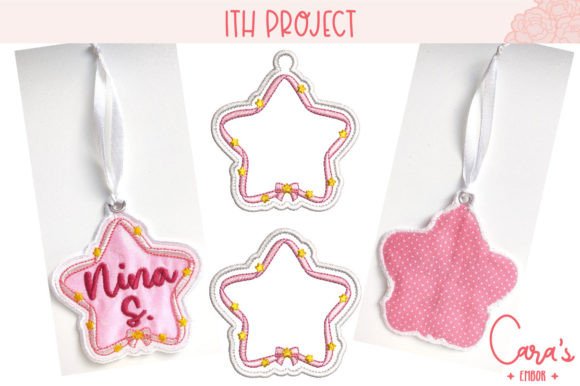
ITH Project - Star Tag Review for Craft Fairs
Stepping into a craft fair or handmade market is all about that first five seconds. That is the window where a customer decides to stop walking, look at your booth, and engage with what you are selling. As an experienced embroidery designer who has spent years turning digital files into physical goods, I know that not every design works as a craft fair product. Some designs get lost in the noise of a busy table display, while others become the star attraction. Today, I am reviewing the ITH Project - Star Tag, specifically evaluating its potential for my weekend booth inventory.
The title alone suggests something playful yet functional. The description mentions it is an "In The Hoop Machine" project featuring a ribbon Snap Tab eyelet technique. This immediately signals to me that this isn't just a flat image; it is a structural element. For an Etsy seller or boutique maker, the ability to create a finished component like a snap tab adds immense value. It transforms a simple embroidered patch into a usable part of a bag or garment. The fact that it fits within a 4×4 hoop, with options for a 5×7 hoop, makes it incredibly versatile for various projects ranging from small pouches to larger tote bags.
First Impressions: Visual Appeal and Market Fit
When I first laid eyes on the preview of the ITH Project - Star Tag, my mind went straight to the baby and children's market. The name evokes a sense of whimsy and safety. However, I also see strong potential in the farmhouse and modern rustic categories. Is it bold? Yes, especially when paired with contrasting thread colors. Does it feel cute? Absolutely. It strikes a balance between decorative and practical, which is exactly what sells well in person.
In a crowded marketplace, customers are drawn to items that look high-quality but also have a story. A design that incorporates a ribbon snap tab offers a tactile experience. When a customer picks up a handmade product and feels the texture of the ribbon against the stitching, they are more likely to buy. The design appears to be clean enough to photograph well for online listings, creating crisp printable mockups that drive sales before the customer even sees the physical item.
Product Versatility: Where the Design Shines
I have been brainstorming how to integrate the ITH Project - Star Tag into my upcoming production run. Here is how I envision it performing across different categories:
- Tote Bag Design: This is the highest potential use case. Attaching a star tag with a snap tab eyelet to a canvas tote bag creates a unique closure mechanism or a stylish accent pocket. It elevates a standard tote bag design into a custom accessory.
- Apron Embroidery: For kitchen-focused sellers, adding this to a bib apron could serve as a charming pocket detail. The snap tab allows for easy attachment of tools or cloths, making it functional as well as beautiful.
- Tea Towel Embroidery: A tea towel with a built-in hanging loop created by the star tag would be a fantastic gift item. It solves the problem of how to hang a damp towel while adding a focal point to the kitchen decor.
- Embroidered Patch: While it is an ITH project, it can easily be trimmed and used as a premium patch. Customers love patches that add a bit of flair to denim jackets or backpacks.
- Fabric Pouches and Pillow Covers: The 4×4 compatibility means it fits perfectly on small zippered pouches or as a decorative corner on a pillow cover. It adds a pop of color without overwhelming the fabric texture.
For a booth display, imagine a row of market bags where each one features a different thread color combination of the star tag. The visual consistency draws the eye, while the variety invites browsing. It is a perfect example of how a single embroidery file can generate multiple SKUs for a small shop product.
Production Reality: What the Designer Needs to Know
Before I commit to producing these for a commercial event, I have to look at the technical side. The efficiency of production determines profit margins. Since this design includes a ribbon snap tab eyelet technique, I need to ensure that the machine setup is streamlined. If the process requires too much manual intervention, it slows down batch production.
I will need to test the stitch density carefully. Designs with dense areas can sometimes cause puckering, especially on lighter fabrics like cotton muslin often used for baby items. If the design is too heavy, it might lose its shape after washing. I must also check the thread colors provided in the file. Do they contrast well enough against white, cream, and pastel fabrics? Good contrast is crucial for the design to stand out in a photo or under the harsh lights of a convention center.
Another critical factor is the hoop size. While the file is 4×4 friendly, I should verify if the resizing function holds up without distorting the geometry of the star. If I plan to sell these as commercial embroidery items, the stability of the stitch pattern is non-negotiable. I will also need to confirm the stabilizer requirements. Heavy-duty cut-away stabilizers might be necessary to support the weight of the ribbon and the density of the stitches, ensuring the finished product remains rigid and professional.
Visual Impact and Customer Engagement
What makes a finished product irresistible? It is often the details that catch the light. The ITH Project - Star Tag has the potential to be a conversation starter. In a physical setting, customers want to touch and interact. The inclusion of a ribbon element adds a dimension that flat embroidery lacks. It breaks the monotony of standard satin or fill stitches.
This design supports brand consistency because it looks polished and intentional. Whether I am selling to parents looking for Babies gifts or crafters looking for accessories, the quality of the execution speaks volumes. A poorly executed tag looks cheap; a well-executed one looks artisanal. By using the right fabric texture and ensuring the edges are clean, the design becomes a badge of quality for my brand.
However, there are cautionary notes. If the design contains tiny details or small lettering (if applicable), it might get lost on curved surfaces like caps or on thick, textured towels. I advise testing on scrap fabric first to ensure clarity. Also, dark fabrics require a specific approach to thread choice and possibly underlay stitches to prevent the background from showing through. Always review the spacing and confirm that the digital embroidery file aligns correctly with the intended placement on the final item.
Final Verdict for Sellers
The ITH Project - Star Tag is a promising asset for any creative entrepreneur looking to expand their inventory. It bridges the gap between a simple decoration and a functional hardware piece. For those who specialize in embroidery business growth, this design offers a low-risk, high-reward opportunity. It is adaptable, visually appealing, and suitable for a wide range of products.
My recommendation is to start with a small batch. Create at least one real mockup to see how the ribbon interacts with the fabric in real life. Compare different fabric colors to find the most striking combination. Once you have confirmed the design assets work seamlessly on your machine, you can scale up production for your next craft fair or Etsy listing. With careful attention to stabilizer selection and thread contrast, this project could become a bestseller in your shop.